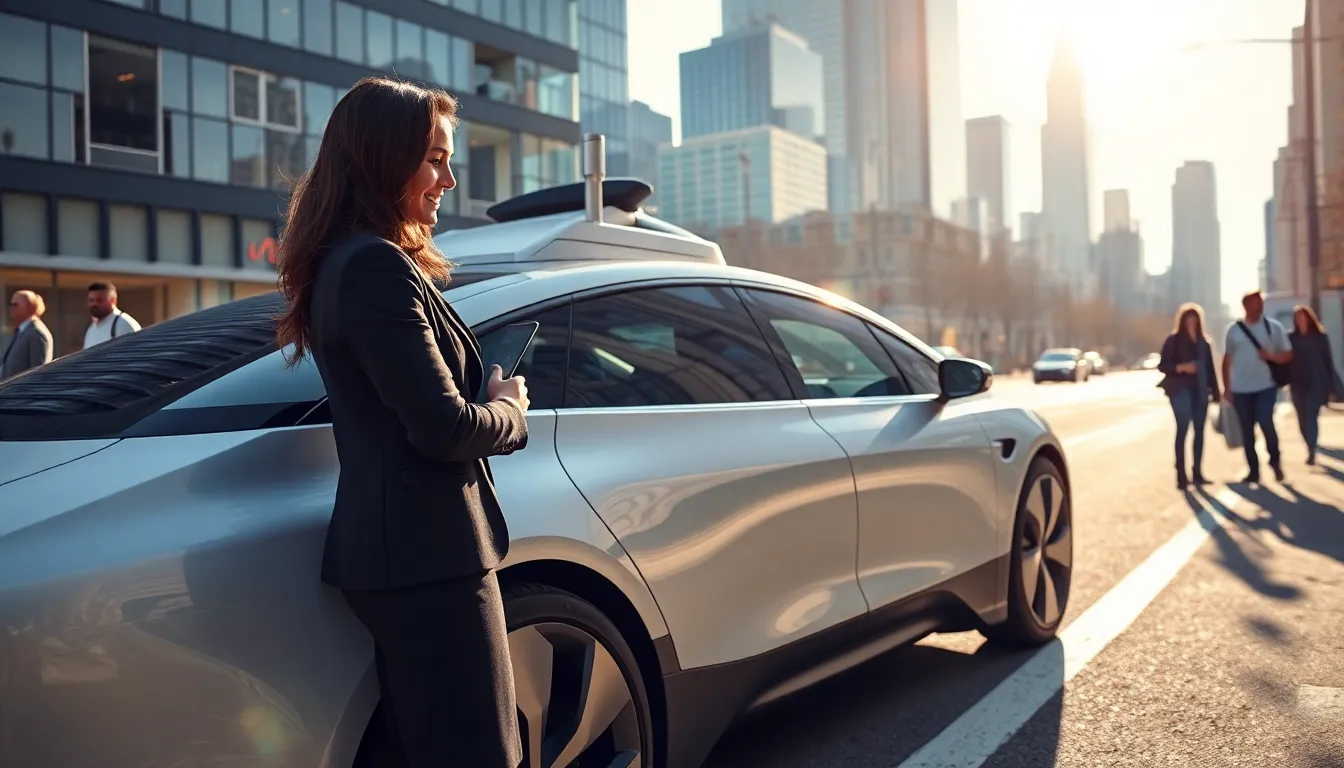

Imagine a world where your car can drive itself while you kick back and binge-watch your favorite series. Sounds like something out of a sci-fi movie, right? Welcome to the age of autonomous vehicles, where the future of transportation is not just a dream but a rapidly approaching reality. These high-tech marvels are designed to navigate our roads, dodge traffic, and maybe even avoid that one pothole that’s been there since the dawn of time.
As the buzz around self-driving cars grows louder, it’s hard not to get excited about the possibilities. From reducing traffic accidents to freeing up time for that much-needed nap during the commute, autonomous vehicles promise to change the way we think about travel. Buckle up as we dive into the fascinating world of self-driving technology and explore how it’s steering us toward a smarter, safer, and undeniably more entertaining future.
Overview of Autonomous Vehicles
Autonomous vehicles signify a transformative leap in modern transport. These vehicles rely on advanced technology to navigate without human intervention, promising a safer and more efficient travel experience.
Definition and Key Components
An autonomous vehicle refers to a car that operates independently without a driver’s input. Key components include sensors, cameras, and artificial intelligence algorithms. Sensors detect surroundings, while cameras provide visual data. Artificial intelligence processes this information, enabling the vehicle to make real-time decisions. Data collected allows these vehicles to understand obstacles and adapt to traffic patterns, ensuring safe navigation.
Levels of Autonomy
Levels of autonomy define how much control a vehicle relinquishes to its systems. The Society of Automotive Engineers categorizes these levels from zero to five. Level zero indicates no automation, while Level five represents full autonomy, requiring no human intervention. Levels one and two involve driver support systems, but drivers still engage with the vehicle. Levels three and four signify varying degrees of self-driving capabilities, allowing vehicles to manage most tasks under certain conditions. Understanding these levels clarifies expectations regarding the gradual integration of autonomous technology into daily life.
Advantages of Autonomous Vehicles
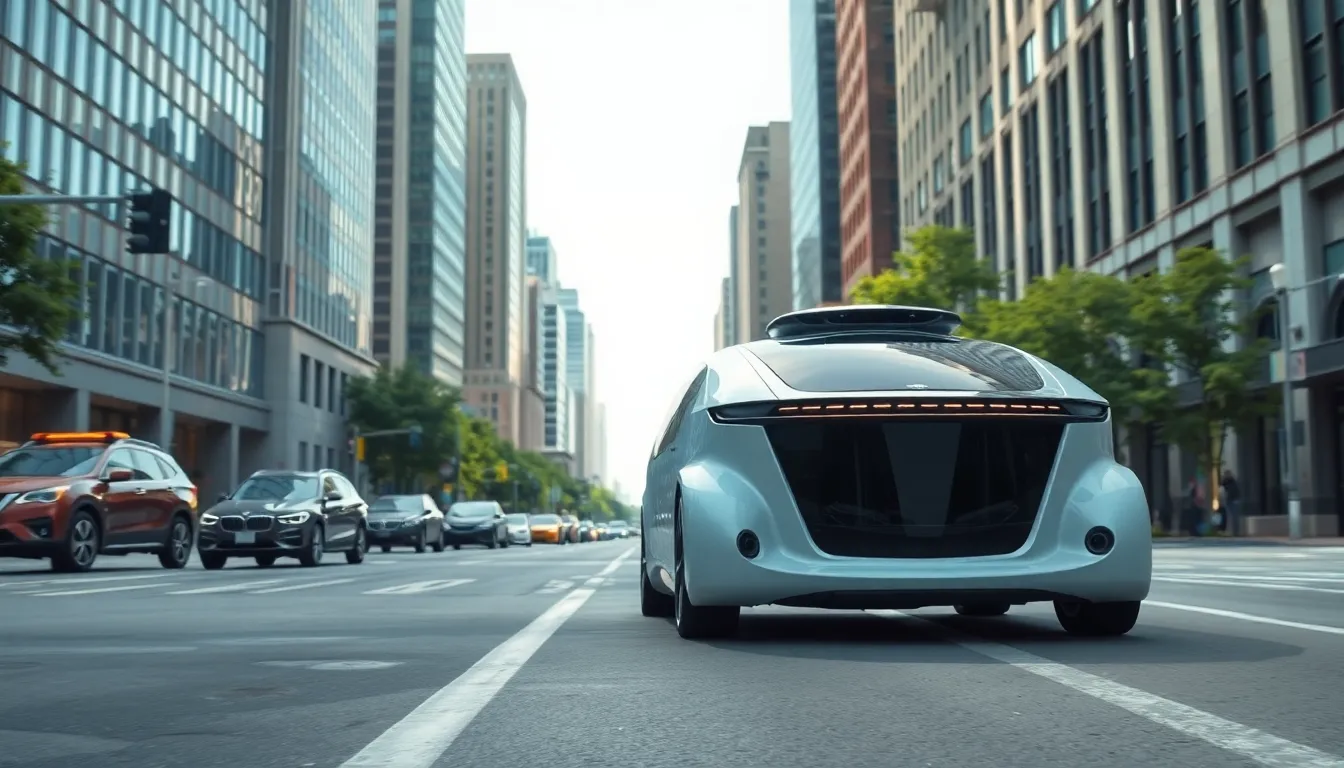
Autonomous vehicles offer numerous advantages that can transform transportation. Key benefits include improved safety and a positive environmental impact.
Safety Benefits
Traffic accidents claim over 40,000 lives in the U.S. each year. Autonomous vehicles significantly reduce the likelihood of collisions by using advanced sensors and cameras to detect obstacles. These vehicles make split-second decisions based on real-time data, decreasing human error—a factor in 90% of crashes. With enhanced safety features, these cars prioritize passenger protection, potentially lowering accident rates substantially. Studies indicate that widespread use of autonomous technology could save thousands of lives annually.
Environmental Impact
Autonomous vehicles contribute to a healthier environment through optimized driving patterns. When vehicles communicate with one another, they reduce traffic congestion, leading to lower emissions. More efficient driving decreases fuel consumption, promoting the use of electric vehicles that don’t emit harmful pollutants. Research suggests that widespread adoption could lead to a 30% reduction in greenhouse gas emissions. As cities adopt this technology, they can experience cleaner air and a reduced carbon footprint, enhancing overall urban sustainability.
Challenges and Concerns
Challenges and concerns surrounding autonomous vehicles impact their integration into society. Legal frameworks and ethical dilemmas require thorough examination.
Legal and Regulatory Issues
Legal implications of autonomous vehicles pose significant challenges for manufacturers and users. Current traffic laws often don’t address the complexities of self-driving technology. Regulatory bodies must evaluate liability in accidents involving autonomous vehicles. In instances of crashes, determining responsibility becomes critical. According to the National Highway Traffic Safety Administration, clear rules are essential for promoting safety while advancing technology. Various states have already begun drafting specific legislation, showcasing an evolving landscape of regulations.
Ethical Considerations
Ethical dilemmas arise as autonomous vehicles face real-world decision-making scenarios. Developers must program vehicles to make choices that could affect lives. An example includes scenarios involving a potential collision with a pedestrian versus the safety of passengers. Public sentiment plays a crucial role, influencing how society perceives these difficult choices. Surveys indicate that individuals often feel uneasy about programming ethical responses into machines. As the technology develops, ongoing dialogue between stakeholders remains necessary to address these moral questions effectively.
Future of Autonomous Vehicles
Anticipations regarding the future of autonomous vehicles center on significant technological and market shifts. Innovations in sensor technology, software algorithms, and artificial intelligence drive this evolution, promising smarter transportation systems.
Technological Advancements
Emerging technologies enhance the capabilities of autonomous vehicles. Cameras, LiDAR systems, and radar work together to create a comprehensive view of the environment. These advanced sensors enable real-time data processing, improving vehicle perception. Artificial intelligence algorithms learn from vast datasets, increasing decision-making accuracy. Integration of vehicle-to-everything communication enhances safety by enabling vehicles to share information. Continuous advancements foster safer and more efficient transportation solutions.
Market Trends
Analyses reveal exciting trends in the autonomous vehicle market. By 2030, the global market for autonomous vehicles could exceed $500 billion, driven by consumer interest in safety and convenience. Automakers invest heavily in research and development, indicating confidence in this technology. Partnerships between manufacturers and tech firms aim to accelerate the deployment of autonomous solutions. Regulatory support shapes industry growth, fostering a more favorable environment for innovation. Consumer acceptance evolves as awareness of the benefits increases, paving the way for broader adoption.
Autonomous vehicles represent a pivotal shift in transportation that promises to enhance safety and efficiency. As technology advances and public acceptance grows, the journey toward fully autonomous driving will likely reshape urban landscapes and commuting experiences. The potential for reduced traffic accidents and lower emissions underscores the urgency for continued innovation and regulatory development.
Addressing ethical and legal challenges will be essential to ensure a smooth transition into this new era. The collaboration between automakers and tech companies is vital for unlocking the full potential of self-driving technology. With ongoing advancements, autonomous vehicles are set to redefine how society approaches mobility, ultimately creating a smarter and safer future for all.