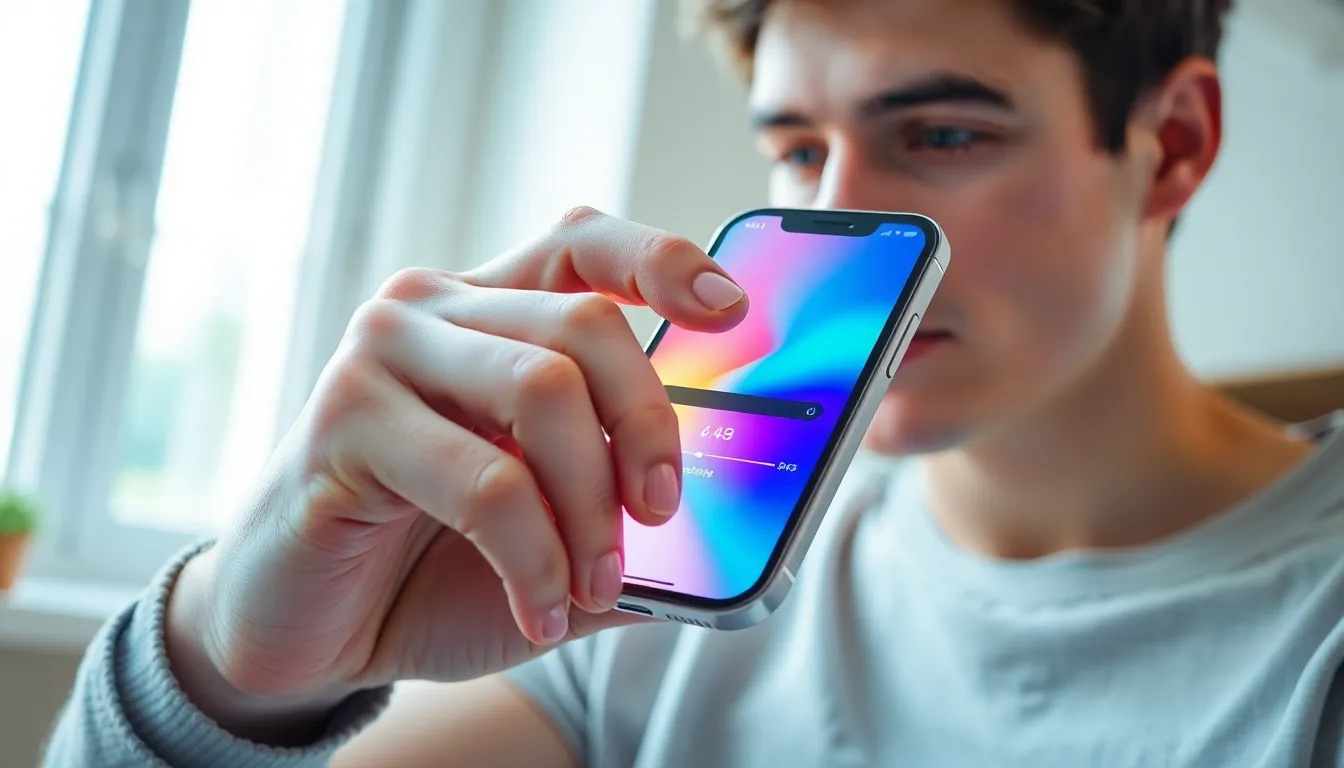

Ever find yourself squinting at your iPhone screen one moment and then feeling like you’re staring into the sun the next? You’re not alone! Many iPhone users have experienced the mysterious case of the fluctuating brightness. It’s like your phone has a mind of its own, adjusting the glow as if it’s auditioning for a role in a sci-fi movie.
Understanding Brightness on My iPhone
iPhone brightness can change for several reasons. Automatic adjustments often depend on ambient light conditions. When the surrounding light is bright, the iPhone enhances brightness to improve visibility. In darker environments, it may lower brightness to conserve battery or reduce eye strain.
Another factor influencing brightness is the screen’s True Tone feature. True Tone uses advanced sensors to adjust colors and intensity based on ambient lighting, creating a more natural viewing experience. Users can enable or disable this feature in Settings under Display & Brightness.
Night Shift is another pivotal component in brightness adjustment. This feature shifts the color spectrum of the display to warmer tones during evening hours, reducing blue light exposure. Such adjustments promote better sleep patterns and can also alter perceived brightness.
User settings play an essential role in brightness fluctuations too. If the Brightness slider in Settings is set to automatic, the iPhone adapts brightness levels dynamically. Some users may find this feature useful, while others may prefer manual adjustments.
Software updates can also impact brightness behavior. Apple periodically releases updates that optimize device performance, which may change how brightness adjustments function. Keeping the iPhone updated ensures all features work correctly.
Lastly, environmental reflections can alter perceived screen brightness. Users in bright sunlight may notice a need for higher brightness to see the screen clearly, affecting overall display performance. Understanding these factors can help users manage and adjust their iPhone brightness effectively.
Common Reasons for Brightness Changes
Brightness on an iPhone can shift due to various factors. Users can identify and manage these elements effectively.
Auto-Brightness Settings
Auto-Brightness adjustments occur based on surrounding light conditions. This setting enhances screen visibility in bright environments. Conversely, it dims the display in darker areas to save battery and reduce glare. Users can toggle this feature on or off in Settings under Accessibility. Controlling Auto-Brightness can lead to a more consistent viewing experience.
Ambient Light Sensor
The ambient light sensor plays a crucial role in managing screen brightness. Located near the front camera, this sensor detects light levels in the environment. It automatically adjusts display brightness, ensuring optimal visibility. Bright sunlight triggers a higher brightness level, while dim surroundings prompt a decrease. Users benefit from the sensor’s ability to adapt settings without manual input.
True Tone and Night Shift Features
True Tone creates a natural viewing experience by adjusting color and intensity based on environmental light. This technology helps prevent eye strain during extended use. Night Shift, on the other hand, shifts colors to warmer tones during evening hours, minimizing blue light exposure. Both features work together to enhance comfort and visibility based on usage time and surroundings. Users can adjust these settings in Display & Brightness within their iPhone settings.
Software Issues Affecting Brightness
Software issues can contribute significantly to changing brightness levels on iPhones. Understanding these factors helps in diagnosing and resolving brightness fluctuations.
iOS Updates and Bugs
iOS updates often introduce new features and fix existing bugs. However, some updates can inadvertently cause brightness issues due to software glitches. Users might notice changes in brightness after installing a specific update. Known bugs may affect the functionality of brightness settings or disrupt the auto-brightness feature. Reporting these issues to Apple can help them release timely fixes. Checking for subsequent updates frequently illuminates any patches aimed at correcting these glitches.
App Interference
Certain apps can interfere with brightness settings, leading to unexpected changes. Apps designed for photography or screen dimming often adjust brightness automatically based on their functions. When running, these apps may override default brightness settings without user consent. Identifying apps that cause these fluctuations requires monitoring performance and user feedback. Closing apps running in the background or adjusting app settings can restore consistent brightness levels. Keeping apps updated ensures compatibility and may reduce interference with brightness features.
Hardware Considerations
Fluctuations in brightness can stem from hardware-related issues. Display components in iPhones play a crucial role in maintaining consistent brightness levels.
Display Malfunctions
Damaged displays often lead to unexpected brightness changes. Users might encounter issues like uneven lighting or flickering, especially with older models. Technical faults in the display assembly, including loose connections, can trigger these problems. A defective ambient light sensor also contributes to inconsistent brightness. In such cases, seeking professional repair can resolve the issue effectively.
Battery Performance Impacts
Battery performance directly influences brightness behavior. Deteriorating batteries may fail to provide adequate power, causing variability in screen brightness. As power drains, automatic adjustments often lower brightness to conserve energy. Users may notice this change during heavy usage or when battery levels drop below a certain threshold. Regular battery maintenance can help maintain optimal performance, ensuring consistent brightness throughout the day.
Managing brightness on an iPhone involves understanding various features and settings that influence screen performance. By adjusting Auto-Brightness and utilizing True Tone and Night Shift, users can enhance their viewing experience based on their environment and time of day.
Staying aware of software updates and potential app interference is crucial for maintaining consistent brightness levels. Regular battery maintenance can also prevent fluctuations caused by power issues.
Ultimately, knowing how to navigate these factors empowers users to take control of their device’s brightness for optimal usage.